

Carbon balance in the marshes of the Malbaie barachois, Gaspésie | 2024 - 2026

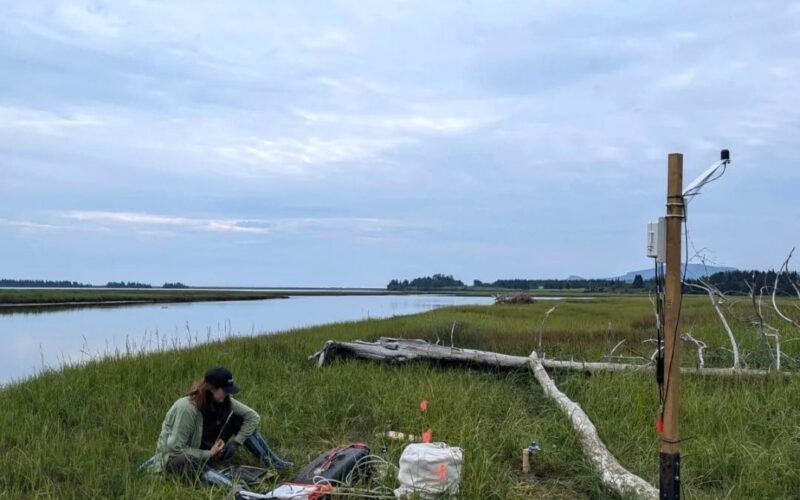

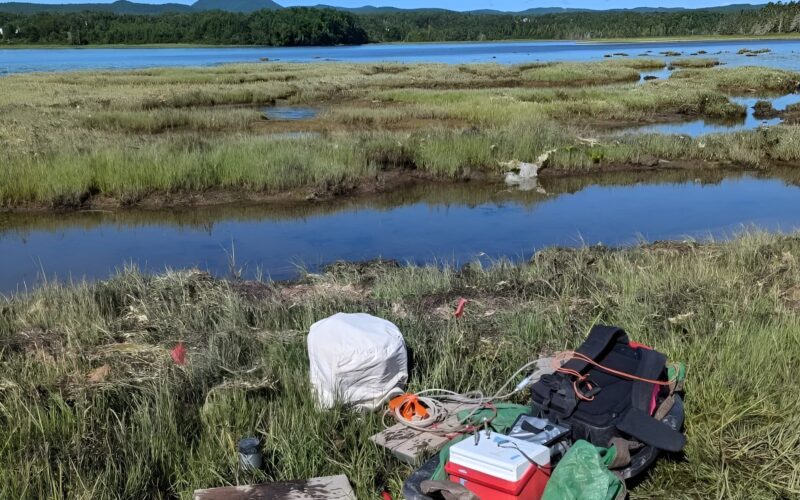

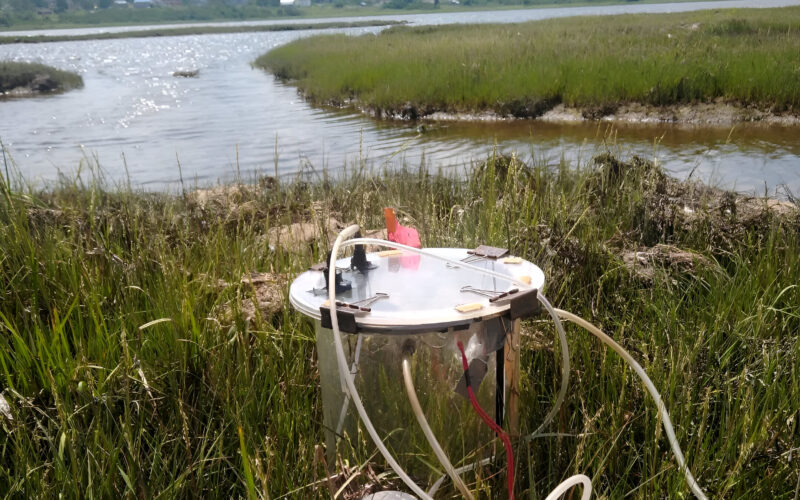
Study sites:
- Barrasways of Malbaie marshes, Gaspésie
Person in charge: Michelle Garneau (UQAM)
In collaboration with:
- Nature Conservancy of Canada :
- Pascal Coté, Camille Bolduc, Catherine Bélanger
- UQAM : Martina Schlaipfer
Graduate students:
- Frédérique Turmel (M. Sc.)
Financial support
- Mitacs Acceleration Program
Vegetated coastal environments capture and store carbon in their soils, a process first recognized by UNEP in 2009 for its ability to limit climate change. As the interface between land and sea, coastal ecosystems are now central to discussions on climate change. Although their surface area is limited, these ecosystems play a crucial role in carbon sequestration. However, rising sea levels make them vulnerable, causing major losses of coastal areas.
Along the coast from the Gulf of St. Lawrence to Chaleur Bay, several barrasways protect coastal marshes from erosion. The research project poses the following question: given the importance of coastal marshes in carbon sequestration, can the Malbaie marsh on the Gaspé Peninsula be a significant ecosystem in the fight against climate change, while at the same time being vulnerable to rising water levels? These marshes have a high ecological value that must be preserved. The Malbaie barachois, partly managed by the Nature Conservancy of Quebec, will undergo a net carbon assessment over two growing seasons (2024-2025) to evaluate its capacity to capture and store carbon.
General objective:
The results of this study will contribute to a better understanding of carbon sequestration processes in tidal marshes, and evaluate their efficiency as an ecosystem service in reducing global warming. These results will support the Nature Conservancy of Canada's wetland conservation and management decisions.
It is therefore crucial to quantify the blue carbon stored by these coastal and marine ecosystems, given the lack of data in Quebec. To this end, measurements of ecosystem exchanges of CO2 and CH4 will be carried out in different zones and plant groups of the Malbaie Barrasways. Two summers of fieldwork will be required to complete this assessment. At the same time, an assessment of the carbon stock accumulated in different parts of the marsh will be carried out to compare net annual values with those accumulated over the long term.
Specific objectives :
To quantify the net carbon footprint of the Malbaie barrasways , the following sub-objectives will be carried out:
- Characterization and mapping of coastal marsh vegetation units.
- Installation of equipment in vegetation units for surface flux measurements.
- Summary of monthly surface CO2 and CH4 flux values over the two growing seasons.
- Assessment of carbon stock in each vegetation unit where surface fluxes are measured.
- Comparison of annual carbon exchange data with those stored in sediments.
- Extrapolation of values to the entire marsh.