

Relationships between climate, fire, vegetation and soil organic carbon (SOC) dynamics in the context of climate change in the spruce-moss forest of Québec | 2015 – 2017



Study sites:
- House
- Gaillard
- Innu
- Lili
- Villebois
Persons in charge:
- Michelle Garneau (UQAM)
- Étienne Boucher (UQAM)
- Gabriel Magnan (UQAM)
Graduate students:
- Éloise Le Stum-Boivin (M. Sc., UQAM)
- Joannie Beaulne (M. Sc., UQAM)
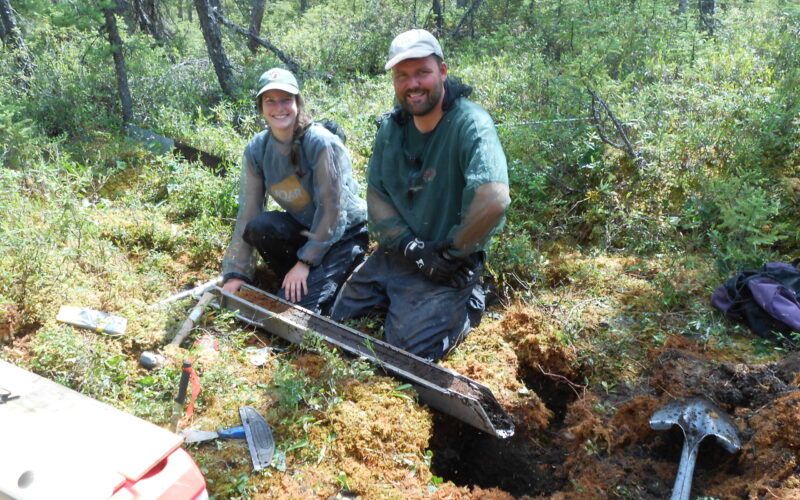
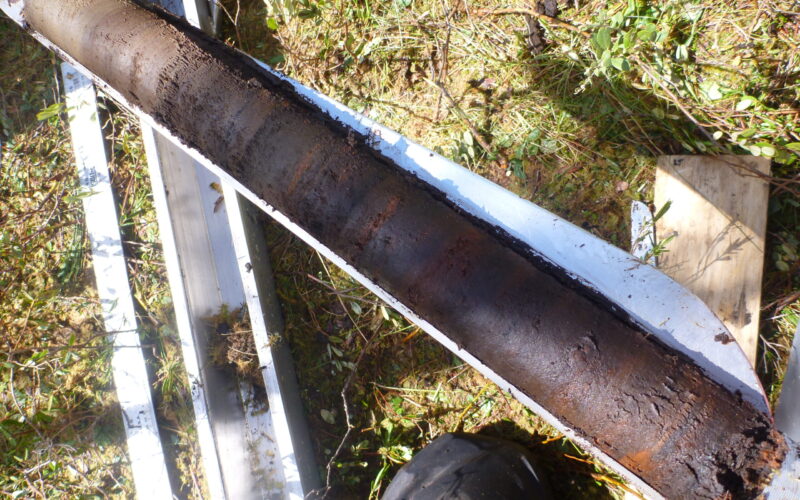
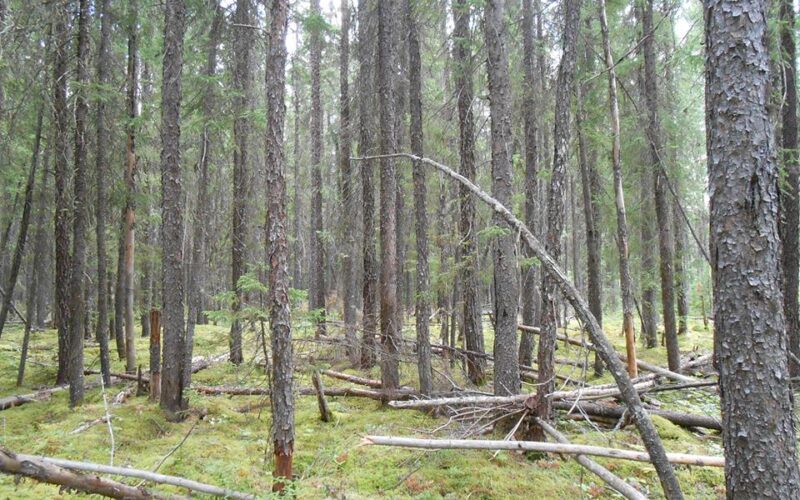
The boreal forest contains a large stock of soil organic carbon (SOC), making it the world's largest terrestrial carbon reservoir. In Québec, the spruce-moss forest is one of the main stocks of SOC built up over several millennia, due to cool, damp conditions and the dominance of vegetation with a low content of easily decomposable elements. However, the rate of accumulation depends on the type of vegetation in the different strata (particularly the important presence of the moss layer) and the fires that episodically consume the organic matter making up the soil humus. The aim of the project is to characterize the interactions between climate, fire regime, forest vegetation dynamics and SOC dynamics over the Holocene to the present day in the moss spruce forest of Québec. The project relies on the use of a multi-model and multi-proxy approach (i.e. a method that integrates several models and paleoindicators) to overcome the various uncertainties inherent in reconstruction techniques and simulation models.
Objectives:
- Reconstructing water table and vegetation variations in relation to long-term organic carbon accumulation in paludified soils;
- Assessing the influence of fire on the dynamics of paludification;
- Comparing organic carbon stocks between paludified soils (peat) and forest biomass at stand scale;
- Characterize the growth of black spruce in boreal forest peatlands, combining paleoecohydrological (plant macroremains, thecamoebiens, 14C and 210Pb dating), dendrochronological (radial growth) and geochemical (δ13C, δ18O) approaches;
- Assess the carbon sequestration potential of forest peatlands and compare the carbon masses of soil organic layers (peat) and tree biomass.