

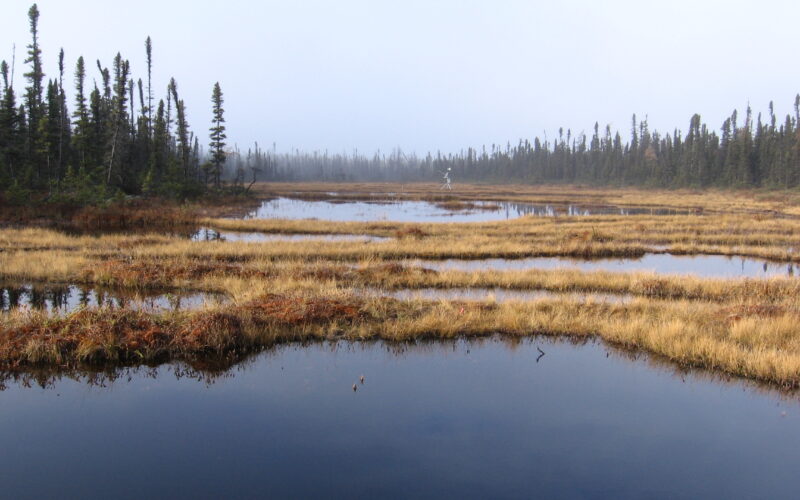
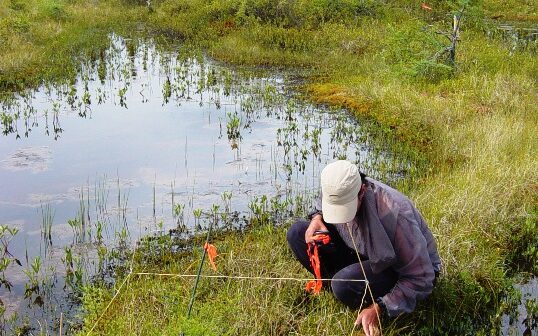
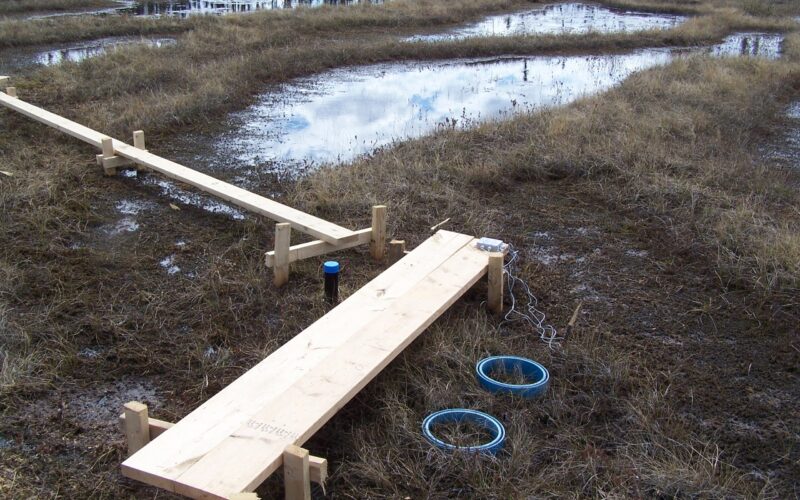
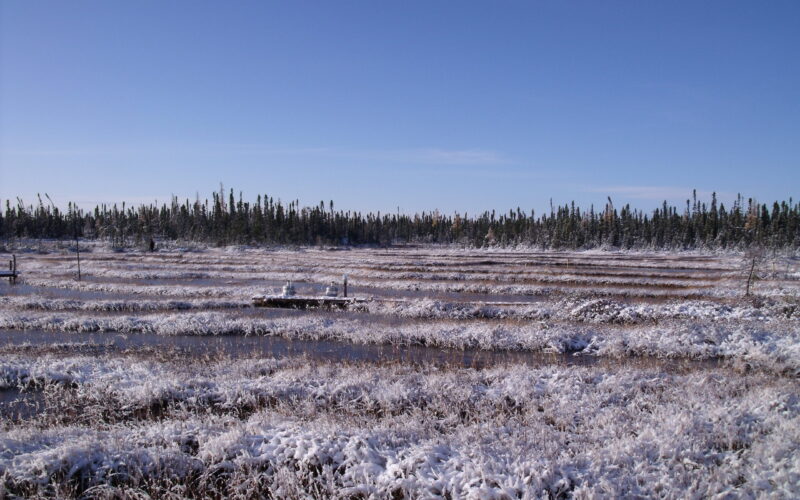
Ecohydrological study of fens in the Laforge-1 region, James Bay | 2005 – 2010
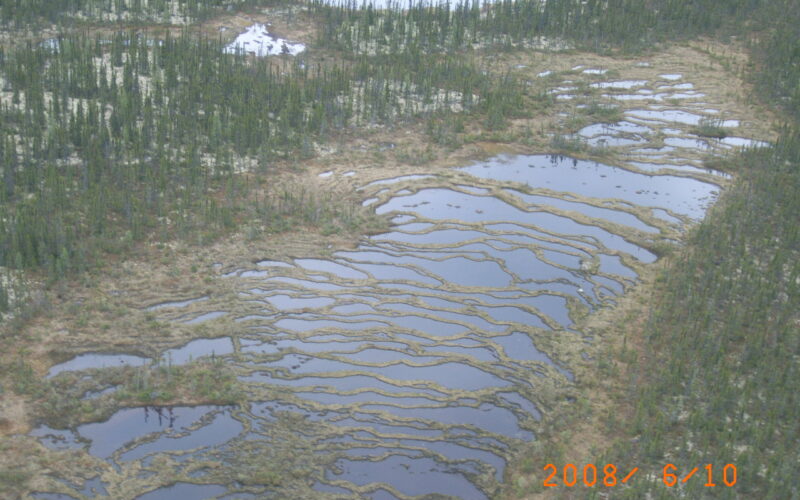
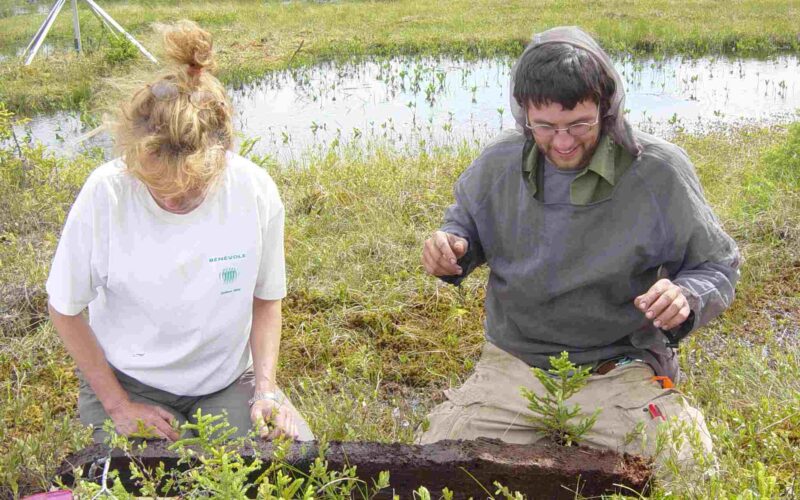
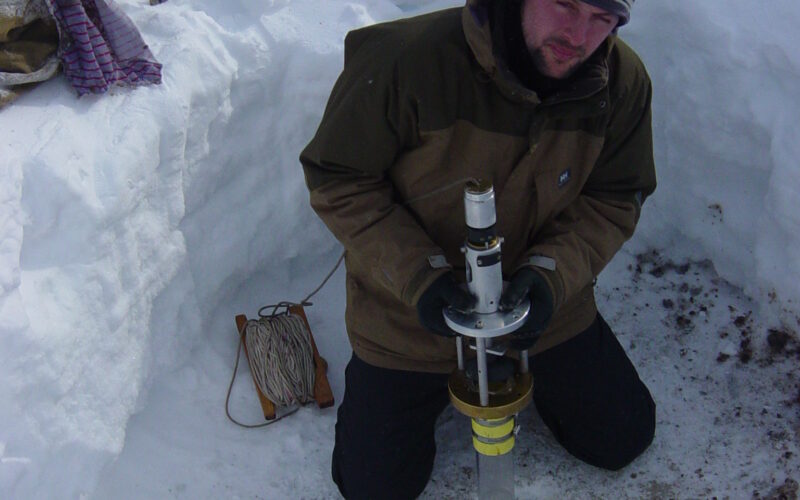
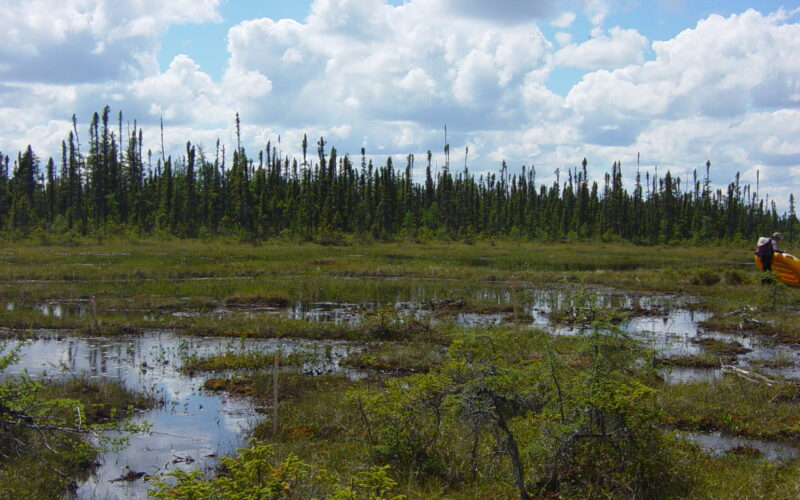
Study sites:
- Airport
- Ours
- Bee
Person in charge: Michelle Garneau (UQAM)
In collaboration with:
- Serge Payette (CEN, Laval University)
- André St-Hilaire (INRS-ETE)
- Monique Bernier (INRS-ETE)
- Danielle De Sève (IREQ)
- Alain Rousseau (INRS-ETE)
- Hydro-Québec
Graduate students:
- Louis Tremblay (M.Sc., UQAM)
- Adam A. Ali (Postdoctoral intern, UQAM)
1. Study of the deteriorating drainage conditions of fens in the Laforge-1 region, James Bay, using peat profile analysis of the terrestrial and aquatic compartments.
Following the integration of multiple biotic markers (proxies) developed by Garneau (1993, 1997, 1998), the project was carried out in the La Grande River watershed in the Laforge-1 sector. The aim of this project is to study changes in the hydrological regime of peatlands, and respond to a need for knowledge about the role of peatlands in the hydrological cycle.
Objectives:
Understanding the behavior of bogs and fens in response to changes in the hydrologic regime in the La Grande River watershed during the recent Holocene.
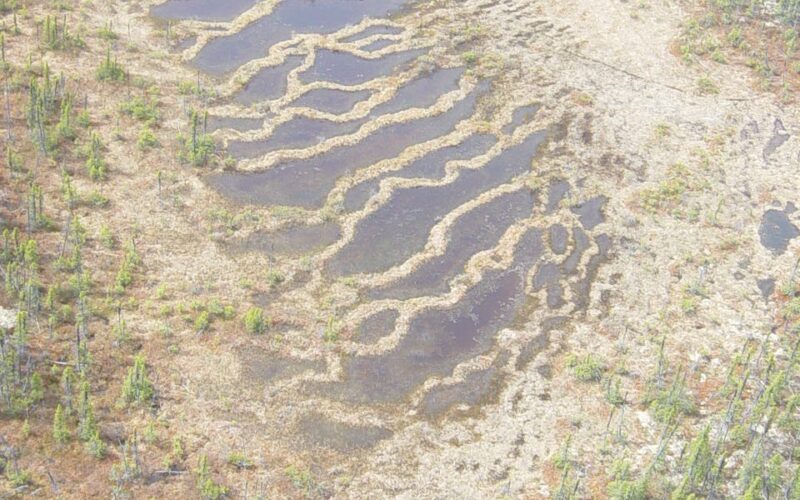
- Assessment of the "aqualysis" phenomenon in two fens (LA-1 sector) and reconstruction of the dynamics of the various biotopes (pools, buttes, strips, flats, plateaux) as a function of climatic fluctuations over the last 1000 years;
- Determining the synchronicity of changes according to biotopes and their level of sensitivity;
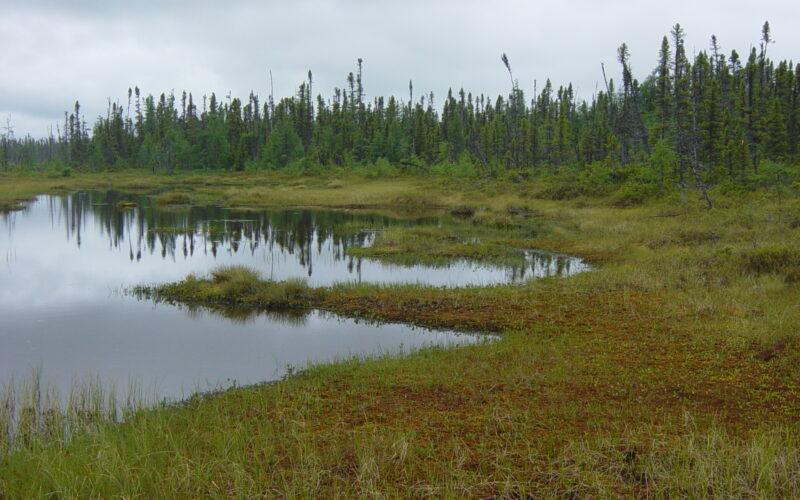
- Linking the stages of pond development with paleohydrological variations in the recent Holocene by sampling and analyzing sediments from five representative ponds within each peatland;
- Reconstructing of former water table levels using macrofossil and microfossil (thecamoebian) analyses of peat sequences from terrestrial compartments collected along two transects (length vs. width).
2. Ecohydrology of highly "aqualized" fens in the La Grande rivière watershed: monitoring the water cycle and CH4 and CO2 dynamics
This 3-year project involves the integrated analysis of all aspects of the hydrological and carbon budgets in an entire basin of fens in mid-northern Quebec. The project aims to develop ecological indicators for quantitative assessment of the degree of spatial evolution of hydrological processes, and to study the hydrobiological processes taking place in highly aqualized fens. The ultimate goal will be to develop a conceptual model of fens for incorporation into a hydrological forecasting model.
The overall findings on the nature and importance of the aqualysis process in fens and on certain characteristics of their hydrological regime, added to the imperative to better characterize the budget on an annual basis, lead us to pursue the ecohydrological study of fens by approaching in an entire basin (or sub-basin) the integrated analysis of all facets of the hydrological budget, including the carbon budget which is dependent on the hydrological conditions prevailing each year.
Objectives:
- Analysis of hydrological processes in highly aqualized (> 50%) fens in Mid-Northern Québec;
- Develop conceptual models of fens to incorporate into a hydrological forecasting model ;
- Develop ecological indicators for quantitative assessment of the degree of spatial evolution of hydrological processes;
- Develop remote sensing monitoring procedures for certain elements of the water budget;
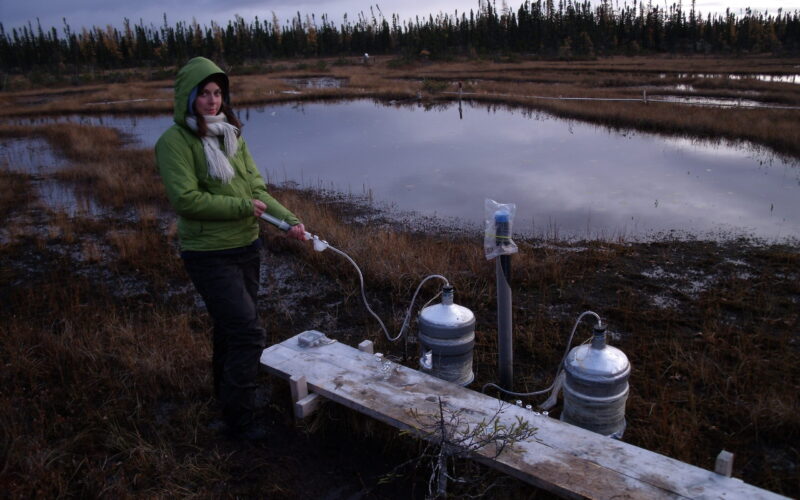
- Perform a greenhouse gas (GHG) budget for fens and link it to the hydrological parameters of fens.