

Carbon dynamics associated with peatlands on the Côte-Nord of Québec | 2009 – 2013
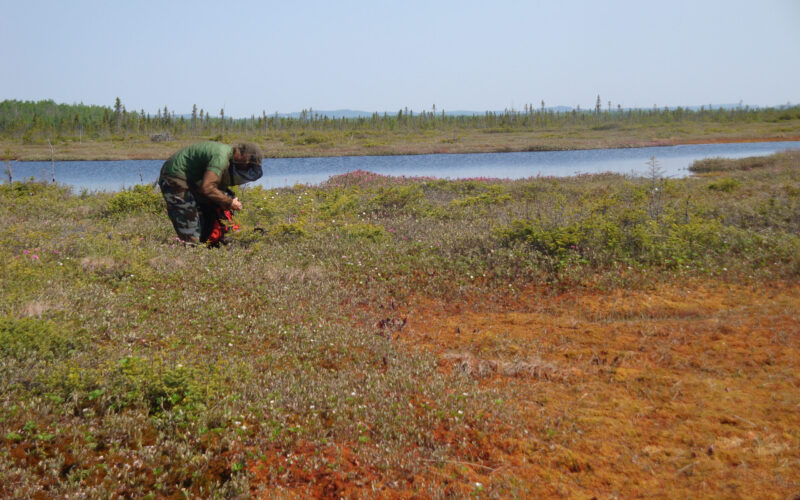
Study sites:
- Baie
- Lac-à-la-truite
- Lebel
- Manic
- Mort
- Plaine
- Red Bay
- Romaine
- Vallée
Person in charge: Michelle Garneau (UQAM)
In collaboration with:
- Serge Payette (CEN, Laval University)
- Pascal Bernatchez (UQAR)
- Anne de Vernal (GEOTOP, UQAM)
- Martin Lavoie (CEN, Université Laval)
- Ian Strachan (McGill University)
- Dan Charman (University of Exeter)
- Ian Hartley (University of Exeter)
Graduate students:
- Gabriel Magnan (Ph. D., UQAM)
- Luc Pelletier (Ph. D., Université McGill)
- Steve Pratte (Ph. D., UQAM)
- Arabelle Sauvé (M. Sc., UQAM)
- Antoine Thibault (M. Sc., UQAM)
- Mathieu Lemay-Tougas (M. Sc., UQAM)
- Nicole Sanderson (Ph. D., University of Exeter)
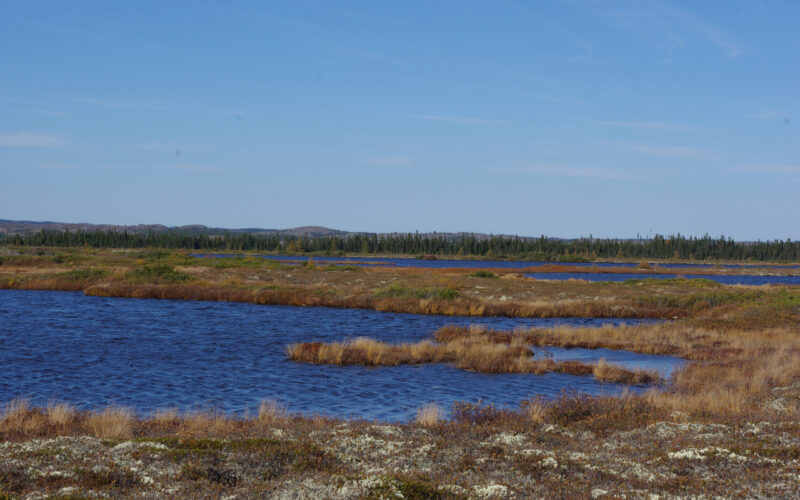
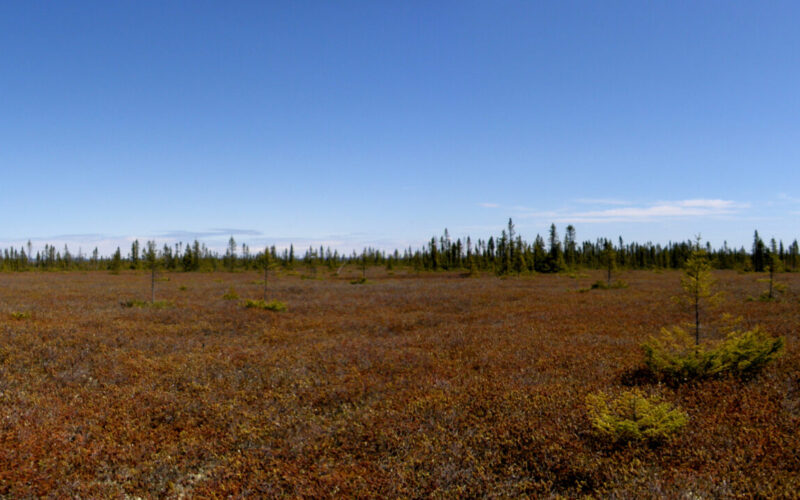
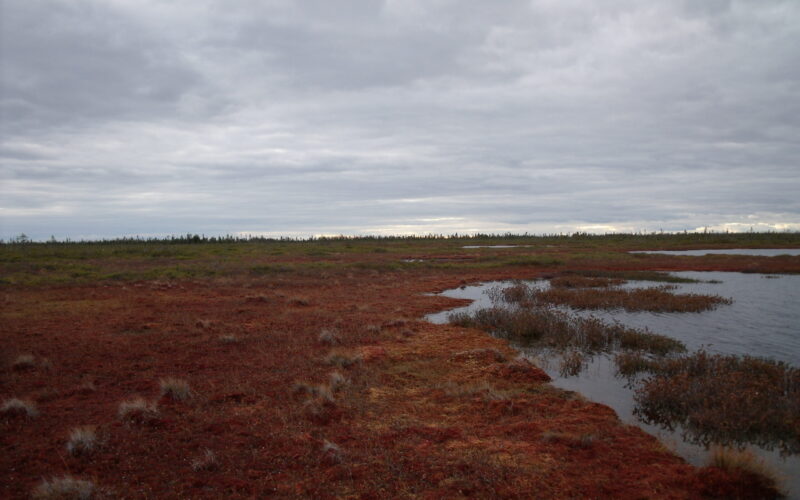
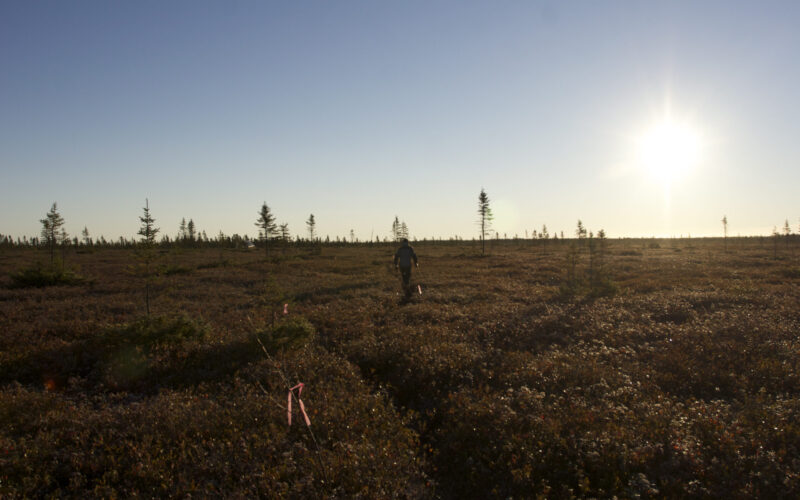
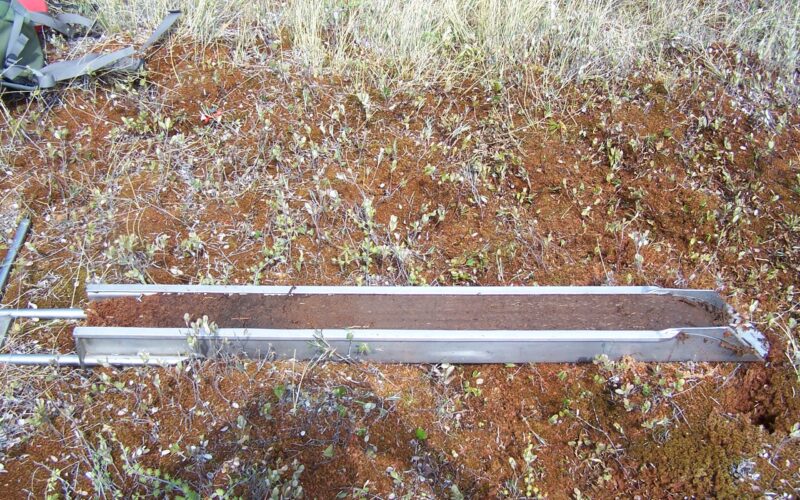
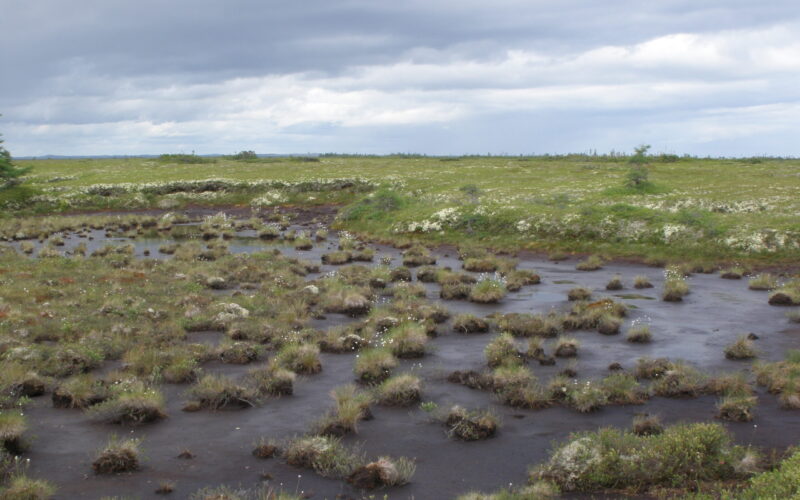
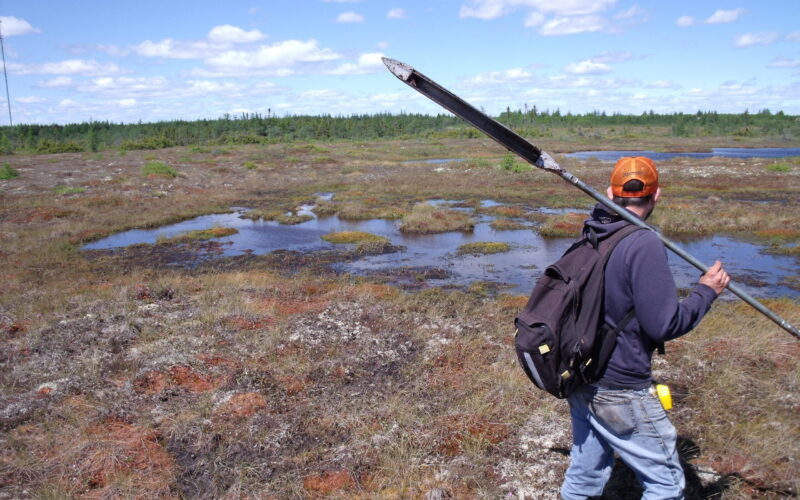
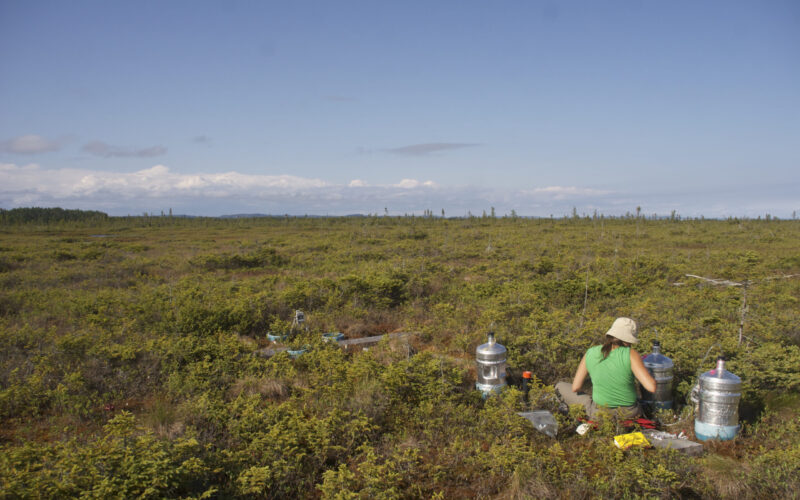
This project focuses on the study of carbon dynamics in boreal peatlands along the north shore of the estuary and Gulf of St. Lawrence, which are currently affected by the impacts of coastal erosion. It is divided into two main sections: 1) recent and Holocene components of north shore peatlands carbon dynamics, and 2) current coastal erosion dynamics in the estuary and Gulf of St. Lawrence. The results of this project will further our knowledge of the geomorphological, climatic and anthropogenic effects on the carbon dynamics of peatlands on the Côte-Nord along a gradient of nordicity.
Objectives:
Focus 1 : Contemporary dynamics
Focus 1.1: Coastal erosion (under the direction of Pascal Bernatchez)
- Quantify the rate of coastal erosion of cliffs over different periods since 193;
- Evaluate the influence of different climatic parameters on the rate of cliff retreat;
- Measure the loss of peatland area and assess the volume of sediment returned to coastal waters;
- Evaluate the potential loss of peatlands according to climate scenarios for the upcoming decades.
Focus 1.2: Biogeochemical cycles (under the direction of Michelle Garneau in collaboration with Ian Strachan)
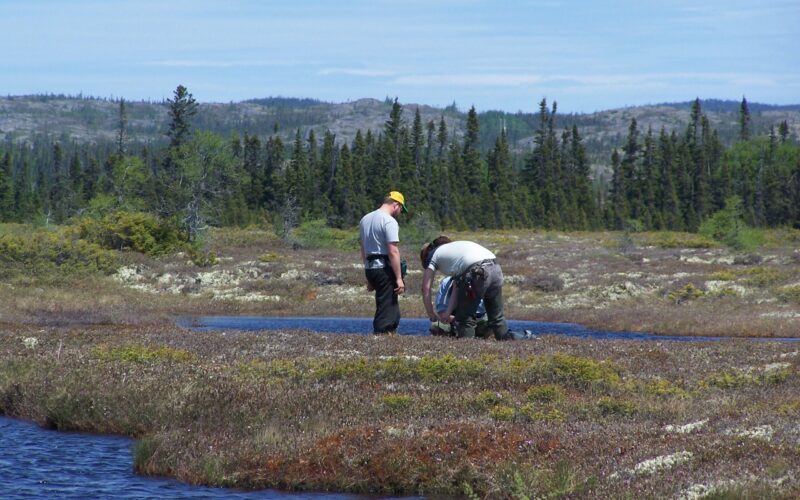
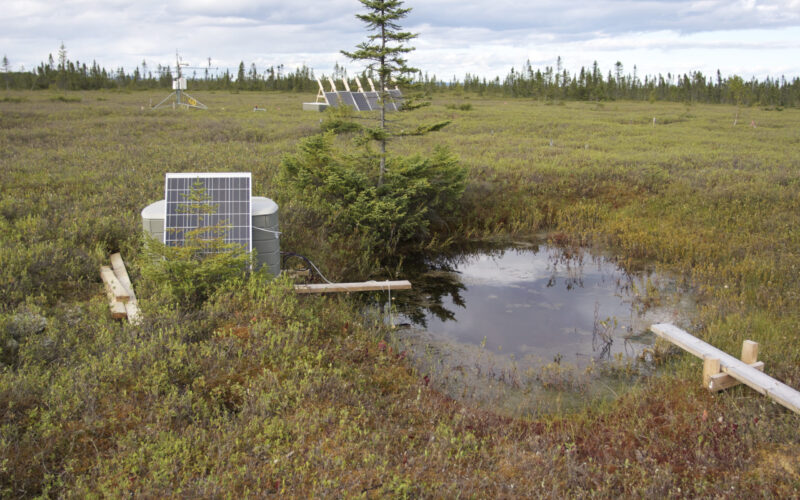
- Measure CO2 and CH4 fluxes using static chambers from selected peatlands in each sub-region;
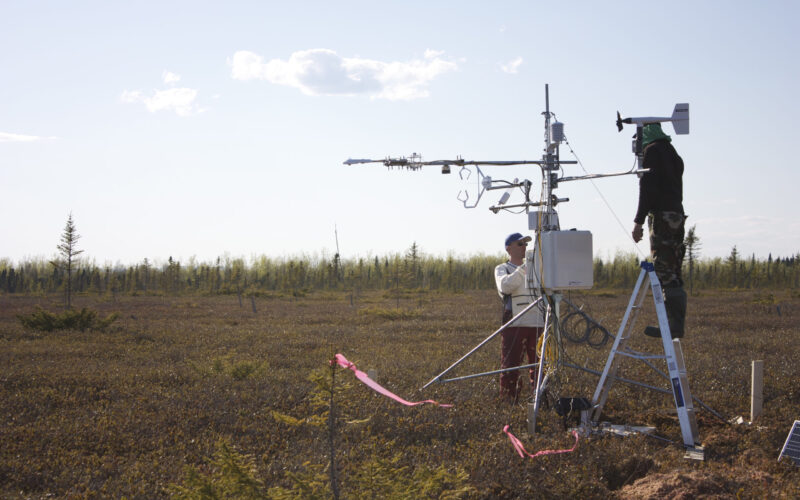
- In one of the sub-regions, measure net ecosystem exchanges of CO2 using an eddy covariance flux tower;
- Assess the spatial dynamics of various surface biotopes and ponds using high-resolution aerial photographs;
- Study in further detail an area located in the sporadic permafrost zone, both to characterize the current state of the peat and the dynamics of surface vegetation, as well as to measure atmospheric and aquatic fluxes in the face of these recent changes (return or not to functional carbon sink conditions).
Focus 2: Holocene dynamics
Focus 2.1: Paleoecology and Holocene carbon dynamics (under the direction of Michelle Garneau and Serge Payette)
- Selecting peatlands according to the nordicity gradient on the Côte-Nord;
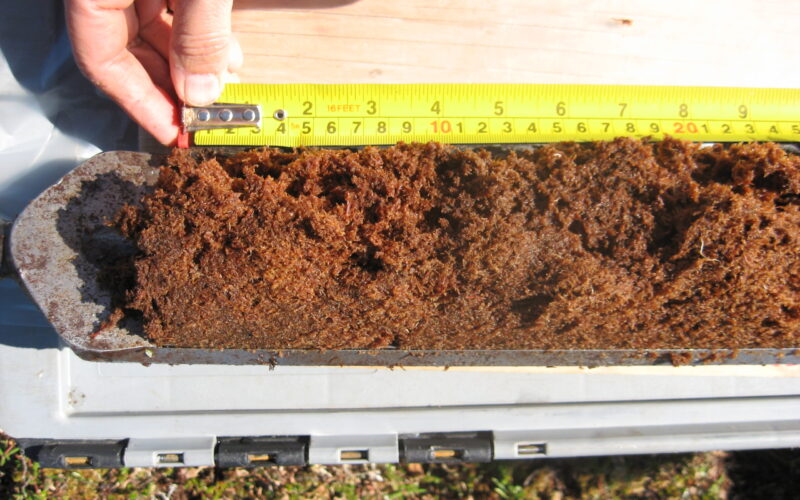
- Reconstruct peat accumulation rates in relation to climate variations;
- Retracing the influence of relative sea level fluctuations on coastal peatland dynamics;
- Determine the paleoclimatic conditions that favored the development and recent thawing of permafrost in peatlands.
Focus 2.2 : Paleoecology and pedogeomorphology of peatlands (under the direction of Serge Payette)
- Select peatlands and sample the first basal peat horizons;
- Carry out macrofossil analyses of peat bases and evaluate the duration of the forested period;
- Perform pedogeomorphological analyses of sandy deposits and determine the conditions that prevailed prior to paludification of the sites.